Rokusho-mine
The ClimbThe Lhotse Face is the steep, icy section of the route above Camp II, where climbers ascended fixed ropes toward Camp III. For Mountain Madness, it was both a training ground on the acclimatization route and a working corridor whose ropes had to be extended before the clients could safely advance. Weather and delays in establishing Camp III made the face a practical measure of the expedition’s readiness—and of the limits of its plans.
Route and acclimatization
Mountain Madness’s acclimatization plan called for four excursions, beginning with a climb to 6,100 meters, the site of Camp I. Clients carried only personal belongings and equipment; the climbing Sherpas, working under Lopsang Jangbu Sherpa, carried rope and supplies. Later excursions were to bring the team higher, with Camp II established at 6,500 meters and subsequent training on the route above it. The point was to gain altitude progressively, then descend to rest before the summit bid.
After an excursion to Camp II, the guides proposed a climb to 6,800 meters on the face, where a run of fixed ropes began. The clients and guides agreed to an early start and a return to Camp II for lunch and rest before descending to Base Camp. The plan also offered a chance to extend the route: Anatoli Boukreev suggested carrying rope higher toward Camp III, and Neal Beidleman agreed.
Rope work above Camp II
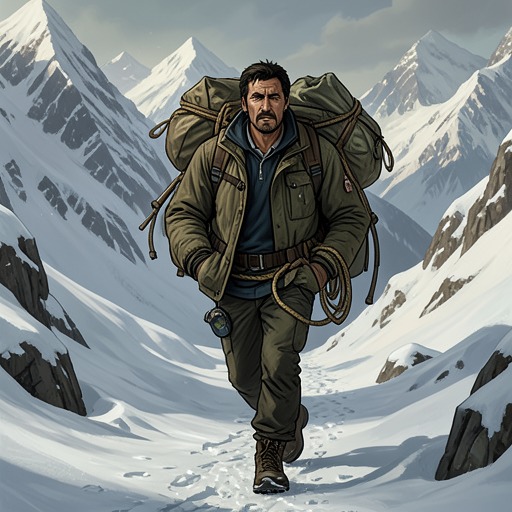
At the foot of the steeper, icy section, Beidleman suggested leaving the rope there and returning with the clients, who lacked crampons and ice tools and could not safely proceed onto the fixed ropes. Boukreev instead continued alone. He put on crampons and a climbing harness, took a jumar and Beidleman’s coil of rope, and began climbing while Beidleman escorted the clients down.
Boukreev reached about 6,900 meters in under an hour. He then spent roughly an hour and a half extending the route, laying the ropes they had brought and adding more than 200 meters of fixed rope to an elevation of 7,100 meters. He began descending around 4 p.m., wanting to get through the Khumbu Icefall before dark. The work was intended to prevent delays when the clients, after resting, moved onto the ropes toward Camp III: a favorable summit-weather window would be useless if they were not prepared to climb through it.
Weather and the delayed Camp III
The next effort to establish Camp III began under worsening conditions. Boukreev set out carrying high-altitude clothing and a tent. Near 6,800 meters, as he clipped onto the fixed ropes, wind rose, snow began to fall, and fog closed around the route. He realized he had made a mistake by not changing out of his “Snickers”; on hard ice dusted with fresh snow, his cleats gave poor traction, so he had to place each step carefully.
In a brief break in the fog, Boukreev saw the Mountain Madness Sherpas descending. They said they had not prepared the Camp III site or pitched tents because the wind and weather were too bad. Boukreev was frustrated: the acclimatization schedule was already behind, and the team had yet to spend a night at Camp III. But he could not order the Sherpas to stay; the authority to do so rested with Scott Fischer or Lopsang Jangbu Sherpa, both then away from the face. Boukreev continued to the end of the fixed ropes, where the storm worsened, stashed his tent with the porters’ loads, and made his way off the face in near-zero visibility. The clients had wisely turned back when the weather changed abruptly.
That evening, Boukreev discussed the problem by radio with Fischer and Beidleman at Base Camp. The Sherpas were nearing exhaustion after several consecutive days of work. A proposal to have four Sherpas set up the Camp III tents the next day and then descend to rest would leave Mountain Madness unable to contribute Sherpas to a joint rope-fixing effort scheduled for April 26 between Camps III and IV. The other expeditions involved included Adventure Consultants, Alpine Ascents, the Johannesburg Sunday Times Expedition, and the Taiwanese National Expedition. Mountain Madness wanted to preserve its place among the early teams eligible to make a summit bid, with May 10 circulating as a possible date; Boukreev therefore agreed to take the Sherpas’ place in the rope-fixing work, after a day of rest and collecting supplies at Camp II.
The face within the summit plan
The need for fixed ropes did not end with acclimatization. On summit day, climbers from the Fischer and Hall expeditions expected the Sherpas to leave Camp IV ahead of them and secure the route so that the clients would not have to wait. But no Sherpas had departed early to do so. The account records competing explanations and later disagreement about whether the leaders had been informed that the ropes were not ready, underscoring how a route infrastructure shared among expeditions depended on communication as well as labor.
The face also belongs to the larger logistics of the summit push. Mountain Madness had 62 oxygen canisters at Camp IV, but only 53 lighter Poisk canisters were set aside for the May 10 climb; the heavier nine were reserved for sleeping. The team’s narrow reserve, combined with uncertainty and delay on the route, left little room for a second attempt. The Lhotse Face thus appears not as scenery but as a bottleneck where acclimatization, rope preparation, weather, staffing, and the summit timetable converged.